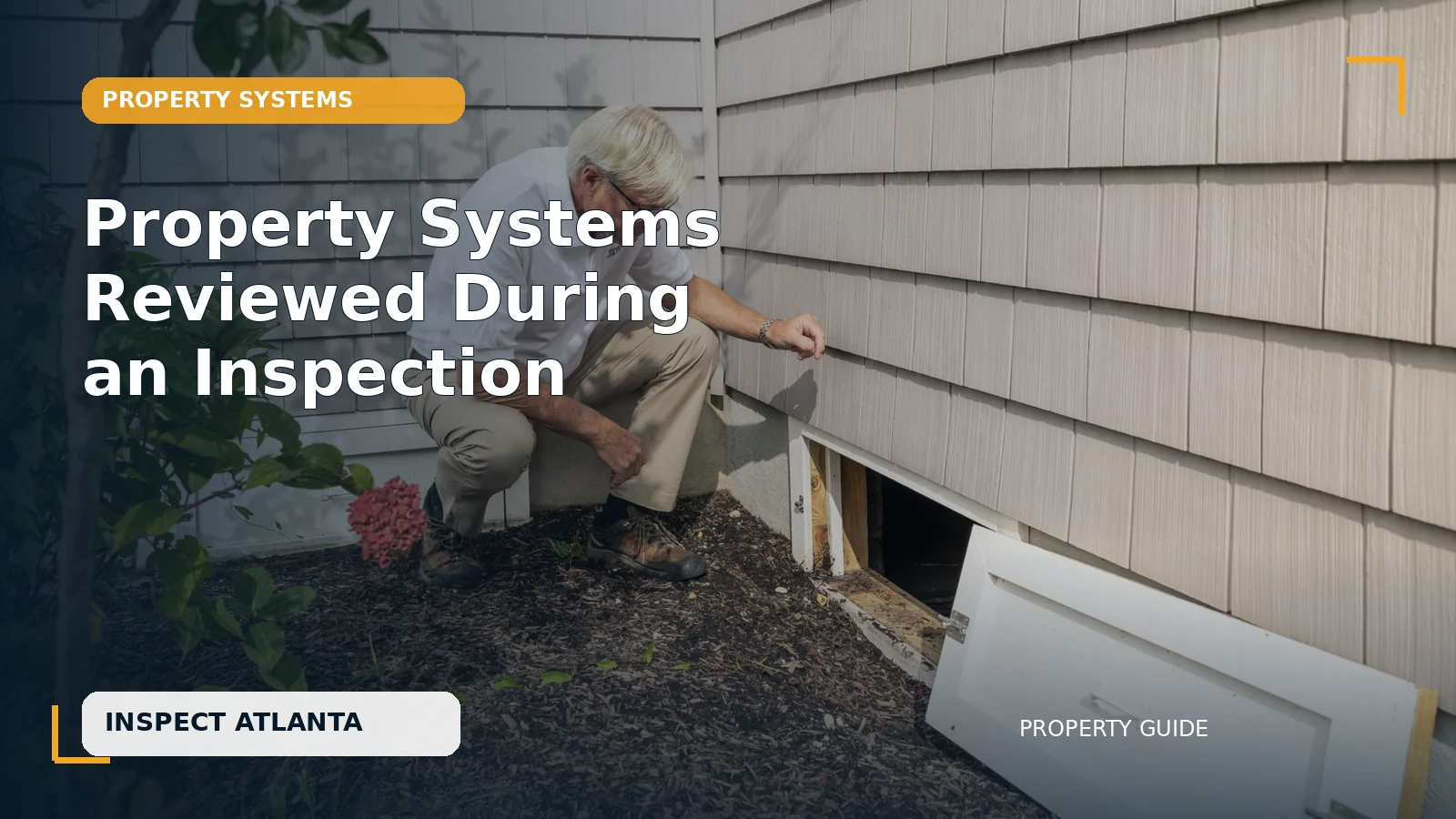
A general property inspection commonly reviews visible and accessible roofing, exterior, structural, electrical, plumbing, heating, cooling, insulation, ventilation, and interior components. The exact systems and level of testing depend on the inspection agreement, property type, utilities, and access.
Roofing and exterior
The inspector may observe accessible roof coverings, flashing, penetrations, drainage components, siding, trim, windows, exterior doors, decks, porches, walkways, retaining features, and grading around the building.
Roof access depends on pitch, height, weather, material condition, and safety. Some roofs are observed from the ground, ladder, windows, or with other permitted methods.
Structure and foundation
Visible structural components may include foundations, framing, floors, walls, columns, beams, crawl spaces, basements, and attic areas. The inspector may document cracks, deterioration, moisture, movement indicators, or alterations that deserve further review.
A general inspection is not a structural engineering analysis. Significant concerns may lead to a recommendation for an engineer or qualified foundation professional.
Electrical system
Accessible electrical components may include service equipment, panels, representative switches and receptacles, visible wiring, grounding and bonding observations, installed fixtures, and safety devices.
Older properties, renovations, additions, and mixed wiring methods can create conditions that deserve closer attention. Electrical repairs should be handled by properly qualified professionals.
Plumbing and water-heating equipment
The inspector may operate fixtures, observe drainage, look for visible leaks, review accessible piping, identify shutoff locations when possible, and observe water-heating equipment.
Underground piping, sewer conditions, concealed leaks, private wells, septic systems, and water quality generally require separate evaluation or testing.
Heating, cooling, insulation, and ventilation
HVAC observations may include visible equipment, normal operating controls, accessible distribution components, filters, condensate management, and temperature response. Insulation and ventilation may be observed in accessible attic or crawl-space areas.
Specialized performance testing, refrigerant analysis, duct leakage testing, and detailed energy audits are separate services unless specifically included.
Interior and installed components
Interior observations may include walls, ceilings, floors, stairs, railings, windows, doors, fireplaces, cabinets, counters, and installed appliances within the scope. The inspector may note damage, unsafe conditions, evidence of moisture, or components that do not operate as expected.
Cosmetic preferences and minor wear are usually less important than safety, function, active moisture, and major system condition.
Why systems are evaluated together
Property systems affect one another. Poor roof drainage can contribute to foundation or crawl-space moisture. Electrical problems can affect HVAC or appliance operation. Plumbing leaks can damage finishes and structural materials. Inadequate ventilation can contribute to moisture and comfort concerns.
A broad inspection helps the client see those relationships instead of reviewing each component in isolation.
When a specialist should take over
A general inspector identifies visible conditions and recommends the next step. A structural engineer, electrician, plumber, HVAC contractor, roofer, environmental professional, or other specialist may be needed to diagnose the cause, determine code requirements, design repairs, or provide pricing.
The report is most useful when it directs the client toward the right follow-up rather than pretending one inspection can answer every technical question.
Factors that affect the inspection scope
- Property type and size
- Age and renovation history
- Utility status
- Weather and roof conditions
- Occupied or stored areas
- Attic, crawl-space, and equipment access
Frequently asked questions
Are underground sewer lines included?
Not usually in a standard visual inspection. A sewer-scope service may be needed.
Will the inspector move furniture or open walls?
General inspections are normally non-invasive. Large belongings and concealed components may limit access.
Are pools and detached buildings included?
Coverage varies by inspection agreement. Confirm those items before scheduling.